
North Cumbria Recovery College

Courses for Adults aged 18+
West Cumbria Mental Health Partnership Recovery College

Courses for Parents, Children & Young People and Families
Core Provision
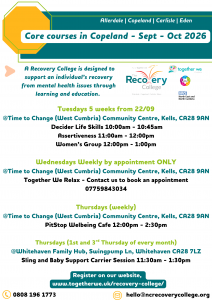
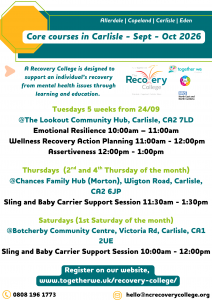
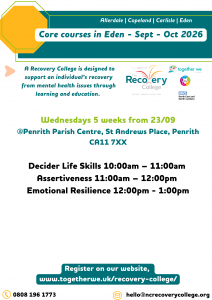
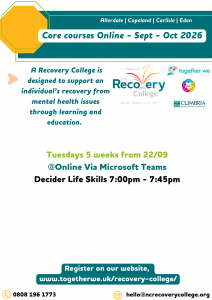
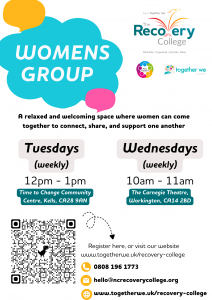
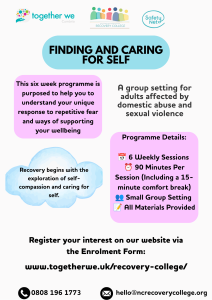
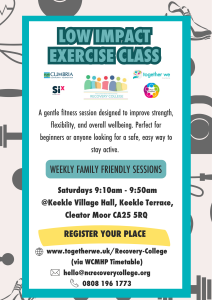
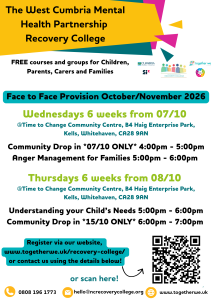
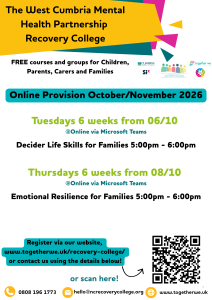
External Provision
Research has shown there are four main reasons as to why Recovery Colleges form such a core part in the development of a more recovery-focused mental health service:
Facilitate Personal Growth
The Recovery College model is co-production, co-design, and co-delivery. Shared learning allows for an active role in shaping learning experiences as well as building on strengths to ensure supported personal growth.
Make new connections
Connect with people and places in the wider community whilst working towards your own goals and taking control of your mental and physical health and wellbeing.
Empowering Environment
A Recovery College can provide an empowering environment in many ways. We want to create a safe space where people can share experiences and expertise as well as own personal choice to attend.
Enabling Relationships
A step away from the 'Them' and 'Us' relationships. A key feature is that all interactions between those with lived experience and those with clinical expertise should be equal.
Testimonials
Positive stories of change!
We hear lots of stories of change from individuals across all of our services and we have the privilege of seeing the positive impact we have had.
Thinking about volunteering?
We’re always looking for new volunteers! Click the button below for more details on how to get involved!
I Lost a lot of confidence and self-esteem during Covid. Started coming to the RC to learn skills to build them back up. I was attending the sessions in Workington. Emily has helped by making the sessions enjoyable and help me understand things even if I don't understand straight away. I am now able to use public transport to get to sessions and have the confidence to speak out and help with demos in sessions. The most significant change is that I can get on the bus to go to places, I find it easier to talk to people I don't know and I've just started going to a different group and was able to interact.
The young people provided feedback that they had learned skills they could take away to manage their wellbeing such as coping strategies and grounding skills for stress and anxiety, and learned about the importance of sleep upon wellbeing and the impact it can have upon mental health. One young person noted that they had appreciated being able to access support outside of school as they were surrounded by people they were more comfortable to discuss mental health related topics with."